
Newsletter 2025 Summer
- Search for Empress Alexandra Feodorovna’s Fabergé Star Frame
- Workmasters Identified 100 Years Later for Two Fabergé Pendants in the Artie and Dorothy McFerrin Collection
- Recent Fabergé Highlights
- Fabergé Enthusiasts Gather in Australia, USA, and the United Kingdom
Archival research shows Empress Alexandra Feodorovna’s (1872-1918), wife of Emperor Nicholas II (1868-1918), treasured a Fabergé star-shaped frame with a painted miniature of their one-year-old son, Tsarevich Alexei Nikolaievich (1904-1918). The Star Frame was offered at auctions in 1994 (A.) and in 1990 (B.) without a provenance and a painted miniature. It is hoped our research together with future additional information shared by Fabergé enthusiasts will reunite the two original components, the Star Frame (A.-B.) and also its original painted miniature as we imagined the Imperial treasure in our reconstituted illustration (B.1) below.
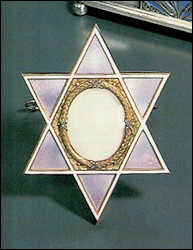
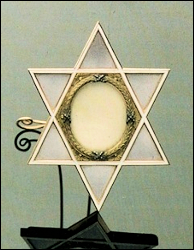
(B.) 1990 Auction – Gold miniature frame, fashioned in the design of a six-pointed star. Each of the triangular sections translucent enameled in pale lavender on a sunburst guilloché field, with opaque white enamel line borders. The oval aperture within a chased green gold laurel wreath surround, applied with rose diamond ties. Ivory back plate with scroll strut. Signed Fabergé. Height 83 mm. (Phillips Geneva, Important Jewels, November 13, 1990, Lot 11, Sale Price Unknown.)
Based on our 2025 research we suggest the photograph (F.) and the miniature (G.) from the Pavlovsk State Museum inserted into the 1990 auction illustration (B.) reconstitutes Empress Alexandra Feodorovna’s Fabergé Star Frame (B.1):
- Fabergé Invoice (Purchase Recorded in 1906 by the Fabergé Firm, and Paid in 1914) (C.)
- Archival Photographs (1906, ca. 1909, and 1915) (D.)
- 1917/1918 Inventory (E.)
- Auction Lot Descriptions (A. 1994 & B. 1990)
- Missing Miniature (G.) Based on a Photograph of Tsarevich Alexei Nikolaievich (F.) Reconstituted (2025, B.1)
- Journey across Time & Space Summary for 120 Years

to Empress Alexandra Feodorovna, Wife
of Emperor Nicholas II
(Photograph Courtesy: Pavlovsk State
Museum, St. Petersburg, Russia)
- Fabergé Invoice (C.) in German issued to Your Imperial Majesty, Her Highness and Empress Alexandra Feodorovna with the May 24, 1906 date for a star-shaped frame with a miniature and no stock number which indicates it was a special order. The invoice includes special orders for the years 1906-1912, and was paid in August 27, 1914.
 (C.) Left: Fabergé Invoice
(Courtesy GARF 525-3-114-342)Nota For Your Imperial Majesty, Her Highness and Empress Alexandra Feodorovna
Purple/Red Stamp in Russian: Paid on Behalf of Her Majesty the Empress, 25080 Rubels (spelled out in full in red), August 27, 1914, is the Total for the 3 Page Invoice (the total for the first page is 2,587.50. Rubels indicated at the bottom of the right column).
German and Russian Text in Guzanov, A. and R.R. Gafifulin, 2013, p. 2741

5075 – 1906, May 24 Frame, Star-shaped, Enamel, 36 Roses [rose diamonds] 150.- [Rubels] With One Miniature from Sujew [Zuev, Russian Miniaturist] 150.- [Rubels]. 300.- [Total Rubels]. А.Ф. [Alexandra Feodorovna] - Archival Photographs (D.) of the boudoir in Alexandra Feodorovna’s Lower Dacha, Peterhof, Summer of 1906, and Mauve Boudoir in the Alexander Palace, Tsarskoye Selo, ca. 1909, and 1915, revealed the Star Frame in situ. The illustrations show the Star Frame was ca. 8.5 cm in height (estimated by comparison with neighboring objects of known sizes), and it had an oval aperture (E.).
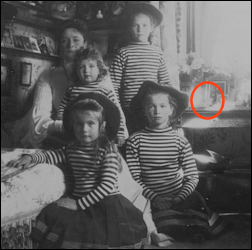
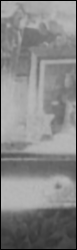 (D.) Summer 1906. Lower Dacha, Peterhof, Empress Alexandra’s Boudoir
(Empress 1903-1908 Album. Courtesy: GARF 640-3-17)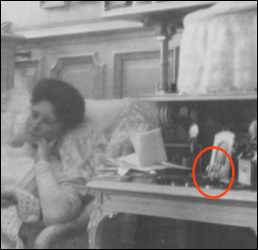
 Ca. 1909. Alexander Palace, Tsarskoye Selo, Empress Alexandra’s Mauve
Boudoir, Private Apartments of Nicholas II and Alexandra Feodorovna
(Romanov Family Album 5, p. 49, #1)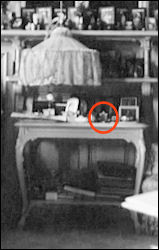
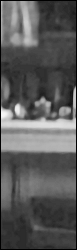 1915. Alexander Palace, Tsarskoye Selo, Empress
Alexandra’s Mauve Boudoir, Private Apartments of
Nicholas II and Alexandra Feodorovna.
(Courtesy: GARF 683-1-121) - 1917/1918 Inventory (E.) of the private apartments for Nicholas II and Alexandra Feodorovna in the Alexander Palace, Tsarskoye Selo, identifies the Star Frame as Gold and contains a “portrait of the heir“, namely Tsarevich Alexei Nikolaievich. The inventory includes a hand-drawn oval aperture also seen in the boudoir photographs which helped confirm they are one and the same. Other star frames by Fabergé and other jewelers working in Imperial times known to the research team have circular apertures.
 (E.) [Item] 124 [corrected from 126]. Frame. Gold, in the Form of Triangles Inserted One into the Other with a “Portrait of the Heir”.
1917/1918 Inventory (Excerpt from the Archives for Handwritten, Graphics, and Prints in the Kremlin. In Russian.
Muntian, Tatiana N., “Fabergé im Kreml” in von Solodkoff, Alexander. Fabergé: Juwelier des Zarenhofes, 1995, p. 24. In German.) - Auction Lot Descriptions with illustrations for 1994 (A.) and 1990 (B.) also match the distinctive oval aperture in (E.) and brought to the surface other matches leading to a positive identification:
- Thirty-six rose diamonds mentioned in the Fabergé invoice (C.) is exactly the number of rose diamonds on the auction catalog illustrations featuring four-tied ribbons around the aperture, each constituted by nine rose diamonds: 9 x 4 = 36 rose diamonds!
- The dimension of Alexandra’s Star Frame estimated to be ca. 8.5 cm high in the archival photographs matches the dimensions in the auction catalogs (8.6 cm by Christie’s, 8.3 cm by Phillips).
- The absence of an inventory number on both the Fabergé invoice and auction lot descriptions suggests the frame is a special order which do not carry stock numbers.
- The uniform light gray color of the enamel in the archival pictures is consistent with the “pale lavender/purple” enamel of the frames in the auction catalogs. It was Empress Alexandra Feodorovna’s favorite color, and was in her Mauve Boudoir at the Alexander Palace in Tsarskoye Selo.
The auction catalogs provide even more clues which will hopefully re-discover Alexandra’s Star Frame and reclaim its Imperial provenance:
- The back is made of ivory and there are opaque white enamel borders along the triangles.
- The elaborate gold motifs in between the triangles and chased green-gold laurel wreaths applied with tied ribbons of diamonds around the circular apertures are almost identical to the one found on the Fabergé star clocks by Fabergé’s Mikhail Perkhin (Workmaster mark М.П. – active 1886-1903). They are in the British Royal Collection and discussed by Tim Richman Gadoffre on his website.)
- The Star Frame only carries Fabergé’s mark on the strut with no mention of a workmaster, assay or city mark which, together with its unusual shape and the opaque white enamel borders, is reminiscent of the objects made in Fabergé’s Moscow workshop (most of them did not have workmaster marks).
- Missing Miniature for Tsarevich Alexei Nikolaievich Reconstituted (2025)
The Fabergé invoice (C.) for the Alexandra Star Frame mentions a miniature by Vasily Zuev, Russian miniaturist painter2, and the 1917/1918 inventory (E.) identifies the Tsarevich Alexei Nikolaievich. The next question arises – what did the Tsarevich miniature look like? By chance, a 1906 miniature (G.) of the Tsarevich by Vassily Zuiev, Russian painter (1870-1941), was recently found on the website of the Pavlovsk State Museum (G.). It is based on the photograph (F.) taken by Hahn and Co. in 1905. Photographs often preceded the miniature painting, and in this case it matches the outline visible in the enlargements (D.) of the 1909 archival picture. (F.) Photograph of Tsarevich Alexei
Nikolaievich by Hahn and Co., 1905.
(Courtesy: GARF 682-1-162)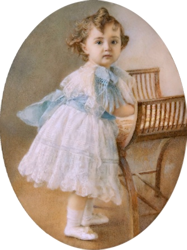 (G.) Miniature of Tsarevich Alexei
Nikolaievich by Vasilii Zuev, 1906.
(Courtesy: Pavlovsk State
Museum, St. Petersburg, Russia)
(B.1) Reconstituted Empress Alexandra
Feodorovna’s Fabergé Star Frame Based
on Our Research and Using the
Pavlovsk State Museum Miniature by
the Russian Miniaturist Artist
Vasilii Zuev.
(Monograph by Skurlov, Vasil’eva,
and Tatiana Fabergé, Vasilii Zuev,
Court Painter of Miniatures,
Artist in the Fabergé Firm
published in 20172) - Journey across Time and Space Summary for 120 Years
May 24, 1906 Special order from Empress Alexandra for the Star Frame from Fabergé (C.), presumably providing the 1905 photographic portrait of the Tsarevich Alexei (F.) as the model for the miniature. Summer 1906 Empress Alexandra Feodorovna took the Star Frame to her Lower Dacha at Peterhof near St. Petersburg, Russia (D.), her summer residence. 1909-1915 Empress Alexandra Feodorovna displayed the Star Frame on the console next to her sofa in the Mauve Boudoir of the Alexander Palace in Tsarskoye Selo, ca. 1909 (D.) and was still there in 1915. 1917-1930 Following its inclusion in the 1917/1918 inventory (E.), Alexandra Feodorovna’s Star Frame would have been transferred to the Kremlin Armory in Moscow before its sale to the West. 1930-1990 Alexandra Feodorovna’s Star Frame would have been sold by Western dealers to Western collectors, losing its miniature and imperial provenance along the way. 1990-1994 Alexandra Feodorovna’s Star Frame was sold twice in 1990 (B.) and 1994 (A.) auctions in Geneva, Switzerland. 1994-current Whereabouts unknown.
Fabergé Research Newsletter readers are invited to share any additional information and insights to help reunite the Star Frame with its miniature.
| 1 | German and Russian Invoice Summary Text published in Guzanov, A. and R.R. Gafifulin, Fabergé Items of Late XIX – Early XX Century in the Collection of the State Museum of Pavlovsk, 2013, p. 274. The book was the first full publication about 34 Fabergé items belonging to members of the Imperial family now housed in the Pavlovsk State Museum, St. Petersburg, and includes extensive listings of Fabergé objects cited with purchasing details. |
| 2 | Skurlov, Valentin, et al., Василий Зуев: придворный миниатюрист, художник фирмы Фаберже (Vasilii Zuev: Court Painter of Miniatures, Artist in the Fabergé Firm), 2017. In Russian. English Annotation in Fabergé Research Newsletter, Spring 2018. |
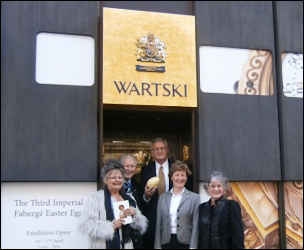
In October 2023, Fabergé enthusiasts met in London for the launch of Ulla Tillander-Godenhielm’s book, Fabergé: The Twilight Years, a 1914-1917 album of drawings from the Henrik Wigström studio, Carl Fabergé’s leading workshop active from 1903-1917 in St. Petersburg, Russia. An additional special treat was a visit to the London antiques dealer Wartski with a long-time connection to Fabergé objects. Wartski’s co-directors, Kieran McCarthy and Katherine Purcell, shared the two original albums with production drawings for the years 1909-1915 from another St. Petersburg Fabergé workshop led by a father and son workmaster team, August and Albert Holmström:

Workmaster Mark AH
 – Active
1857-1903
(Photographs Courtesy of
Ulla Tillander-Godenhielm)
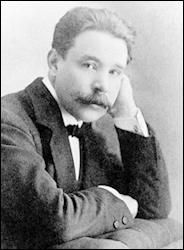
Son of August Holmström, Continued
Using His Father’s Workmaster Mark
AH
– Active 1903-1917After August Holmström died in 1903, his son Albert had taken over his father’s Fabergé workshop. Page by page, we saw the wonderful watercolor and colored pencil drawings of objects created by the craftsmen in the Holmström studio. In his 1993 monograph, Fabergé: Lost and Found, Kenneth Snowman, proprietor of the Wartski jewelry shop from the 1940s to 2002, tells the story of Holmström’s 1909-1915 Production Albums and how he acquired them. The amazing variety of drawings for Fabergé objects was a joy for us to discover and to learn more about them.
In 2018, I had written in some detail about three types of Fabergé drawings1 in the Fabergé Research Newsletter:
- Working Drawings were for the craftsmen to use while creating an object, and often had cost or other annotations written on the drafts.
- Production Drawings were drawn into the production albums to document the final object upon completion. The albums were not only a record of what was made, but were also used as inspiration for future pieces.
- Client Approval Drawings, the only drawings seen outside of the workshops, were created on “speculation” in hopes a client would like the piece and commission it to be made by Fabergé’s workmasters. Many designs were drawn for the Imperial Cabinet, but not all were approved for production.
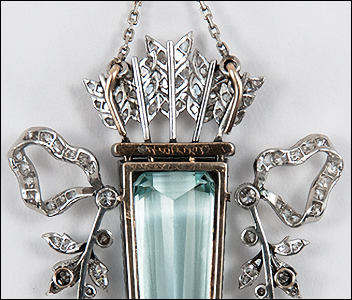
During our 2023 Wartski visit, two drawings in the Holmström Production Albums caught my eye, because I recalled similar, or perhaps even the same objects, from the Artie and Dorothy McFerrin Collection on loan to the Houston Museum of Natural History in Texas. Indeed, two of them (A.-B.) are in the McFerrin Collection, and a third similar pendant (C.) is known from a 2001 auction. None of the three objects found in the published literature are identified with Holmström workmaster marks, yet all are cited as Fabergé.


The drawing in the Albert Holmström Production Album in the form of an aquamarine pendant (D.) with platinum and diamond arrows, bows, and garlands is dated February 9, 1910, and the word Pendant above the drawing has the N. 2689, which according to Fabergé researchers Vincent and Anna Palmade, suggests it was a commissioned piece. Differences between the production drawing and the completed aquamarine pendant (E.) show the bows at the top are not alike (three arrows vs. five), the chains are attached to loops vs. arrows, and the pendants at the bottom are not identical. The Fabergé firm was known to slightly alter designs to ensure no two pieces are exactly alike, so a successful design was made a little different each time to be unique.
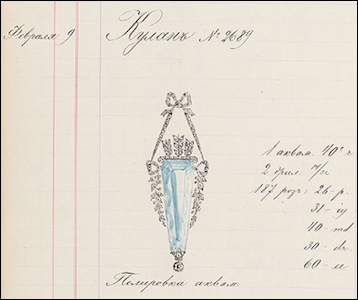
Dated February 9, 1910 [Year not shown on the illustration]. On the right of
the drawing are the number and types of stones used: 1 aquamarine, 2
diamonds, 187 roses (rose-cut diamonds), as well as their sizes and Fabergé
price codes, and identified under the drawing as Polished aquamarine.
(Wartski, London)
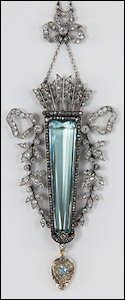
(Christie’s, London, May 28, 2012, Lot 240) 28773 and 95613 (second stock number only appears
in the book, From Snowflake to an Iceberg, 2013, p. 207; front and verso photographs.
(Courtesy of the McFerrin Collection)
The McFerrin pendant (E.) our group was viewing is a Moscow piece from 1899-1908, and the stock number 28773 dates it to ca. 1905, i.e., five years before the drawing (D.) in the 1909-1915 Holmström’s Production Drawing Albums our group was viewing. A second stock number, 95613 on the McFerrin pendant, is a St. Petersburg stock number from ca. 1912. Holmström’s workshop was in St. Petersburg, yet in his production album, several drawings have “Moscow” written next to them, implying Fabergé objects were created and then exchanged between the two Fabergé branches. Therefore, it is possible the McFerrin aquamarine pendant was designed for the Moscow branch in 1905, given a Moscow stock number, but did not sell, and was then sent to the St. Petersburg branch in 1912 for a fresh market. At that point, a second stock number was assigned to the pendant. The similarity of the drawing and the McFerrin piece serve as evidence, although the pendant was originally for sale in the Moscow branch, it was designed in the same Holmström studio in St. Petersburg, and its design can now be attributed to its workmaster and the relevant time period.
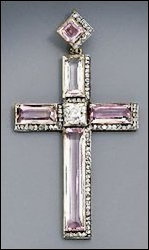
The topaz cross pendant (G.) in the McFerrin Collection has a discovery timeline of over a century (1912-2025):
- February 10, 1912 – Holmström production drawing (F.) on top of the sketch.
- December 12, 1912 – Grand Duchess Olga’s (1882-1960) cross pendant (G.-H.) was purchased jointly by Emperor Nicholas II (1868-1918) and Empress Alexandra (1872-1918) from Fabergé’s St. Petersburg shop for 1,350 rubles, then about £135.2
- February 17, 1913 (original invoice) discovered by Valentin Skurlov, Russian Fabergé scholar, and published by Christie’s, London, November 26, 2012, Lot 220.
- 2016 – Pendant with a few details (G.) recorded in a second catalogue raisonné published by the McFerrin Collection, Fabergé: The McFerrin Collection, The Opulence Continues, 2016, p. 116)
- Identified in October 2023, and its chronology published in the Fabergé Research Newsletter, Summer 2025, because the 1912 production drawing is an exciting new addition to the McFerrin Fabergé Collection records.

contains handwritten notes stating the number of stones used, 6 pink topaz and
171 roses (120 rose-cut diamonds) with sizes and Fabergé cost codes.
(Wartski, London; Fabergé Research Newsletter, Spring 2013)

Topaz and Diamond Cross, St. Petersburg,
1912, Stock Number: 95481 with an Imperial
provenance dated December 12, 1912
(Christie’s, London, November 26, 2012,
Lot 220 or auction, line up; Fabergé:
The McFerrin Collection, The Opulence
Continues, 2016, p. 116)

Alexandrovna of Russia (1882-1960),
Portrait Photograph between 1910-1915
(Wiki Commons)

(Only in the hard copy auction catalog with credit to Dr. Valentin Skurlov.)
Text: COURT JEWELER ST. PETERSBURG MOSCOW. ODESSA. LONDON … TO HIS IMPERIAL | MAJESTY SOVEREIGN EMPEROR
17 February 1913 p. | I2 | Cross with Topaz in Rub. [Rubles] 1350. | I/2 | 675.
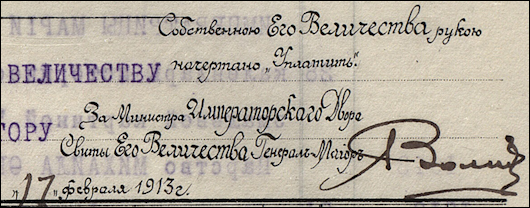
Imperial Court – Retinue His Majesty Major General A.V. or A.B.
(Christie’s, London, November 26, 2012, Lot 220)
For the two McFerrin Fabergé pendants in this study the original archival documents helped scholars identify the artist or workshop which created two pieces of Fabergé art, and an original financial record added an extra dimension to the history of topaz pendant at auction. Anna and Vincent Palmade shared their stock number knowledge and translation help, and Riana Benko and her Slovenian colleague, Zvezdana Šter, sorted out the invoice details discovered by Valentin Skurlov in Russia. My thanks to one and all!
| 1 | Adams, Timothy, “Fabergé Design Sketches and What They Teach Us”, Fabergé Research Newsletter, Fall and Winter 2018. |
| 2 | Fabergé Research Newsletter, Spring 2013. |
On August 11-12, 2025, over 100 articles about the sale of the Fabergé name appeared on my daily Google account which has for years kept me posted with links to Fabergé happenings for auctions, exhibitions & museum events, and publications worldwide. That day the HUGE volume of headlines, all quite similar and illustrated with modern Fabergé objects, announced “One of the World’s Most Renowned Names in Luxury … Fabergé Sold for £37 Million [$50 million]”. Within a short period of time, I received a simple email question: “What is Fabergé and when did it begin?” I answered as best I could while drowning in a flood of electronic news media not carefully fact-checked. My particular interest over the years has been the original Russian Fabergé jewelry firm, only in business from 1842-1917:
- Fabergé jewelry firm established in 1842 by Gustav Fabergé (1814-1894).
- His son, Peter Carl Fabergé (1846-1920), assumed solo management of the firm in 1872, and was joined in 18821 by his brother Agathon Fabergé (1862-1895).2
- The jewelry firm was closed permanently by the Bolsheviks in 1918, sometime between March and July. Carl Fabergé left St. Petersburg in September or October 1918.
Many attempts have been made over the years to create modern Fabergé copies, imitations, and even Fauxberge, but it is not always easy to tell them all apart from the originals. John Jeffay in his article, Fabergé Eggs, from Revolution to Reinvention, presents “a quick history of Fabergé, ancient and modern, from its inception in Saint Petersburg in 1842 to the present”, and introduces the 1913 Fabergé Winter Egg auction in London to be held on December 2, 2025.
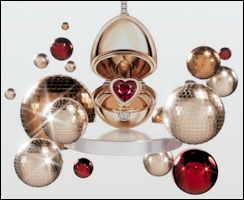
[$50 million] – “Gemfields will part ways with one
of the world’s most renowned names in luxury
to expense and focus on other projects.”
(Professional Jeweller, UK)
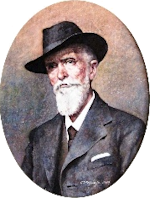
Gilbert on His Website
Commemorates the 105th
Anniversary of Carl Fabergé’s in a
Lengthy Biographical Summary,
“The Imperial Legacy of
Carl Fabergé (1846-1920)“.

Authorized Retailer Includes a Historical Fabergé Outline
Interwoven with Their Modern Fabergé Objects.

Dilapidated Dacha to Be Auctioned in
2026. Moskauer Deutsche Zeitung, August
2025. (In German, translation into English
is an option on the website.) 2023 Youtube
with the reporter “inside” some old photos, a
visit to Fabergé’s shop in St. Petersburg, etc.
(Shared by Juan Déniz, Gran Canaria)


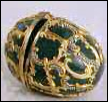
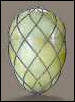
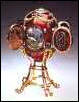

Annemiek Wintraecken from the Netherlands.
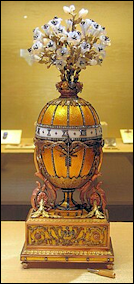
Lilies Clock, made in 1899
for Alexandra Feodorovna as
a gift from Nicholas II.
(Wiki Commons)
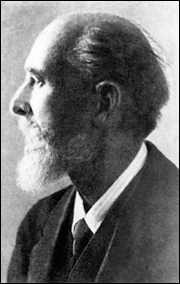
Фаберже Born-30 May [O.S. 18 May]
1846 Saint Petersburg,
Russia/Died-24 September 1920
(aged 74) Pully, Switzerland.)
Wikipedia Entry Has Many Biographical
Facts Supported by Footnotes & a
Long Bibliography of Verified Data.
(Wiki Commons)
on a recently updated Fabergé Research Site with an expanded Search feature.
The 17th year of our Fabergé Research Newsletter on the Internet begins with this Summer 2025 issue – Happy Birthday with a special thank you to the dedicated Fabergé enthusiasts, who all
these years shared and are still sharing their art history research as well as Fabergé-related news.
The free encyclopedia in Wikipedia (Creative Commons Text segments) is a List of Fabergé eggs (Imperial, Kelch, Other) with illustrations and their location by owners including includes date, egg name, image, description, and an extensive bibliography of monographs and journal articles – a comprehensive quick reference tool without fees.
| 1 | Also cited as in other sources as 1892. |
| 2 | Lowes, Will, and Christel Ludewig McCanless. Fabergé Eggs: A Retrospective Encyclopedia, 2001, pp. 194-198. |
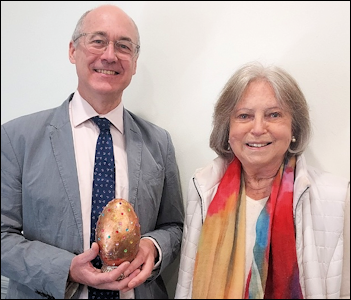
Faber’s 2025 Fabergé Speaking Tour on the Hume Circuit, an Arts
Society Program in Charlestown, Australia.
(Faber, Toby. Fabergé’s Eggs: The Extra-Ordinary Story of the
Masterpieces that Outlived an Empire, 2008; Allen, Jane. “The
Impassioned Collector: Arthur E. Bradshaw (1879-1939)”, Fabergé
Research Newsletter, Spring 2020, and monograph published in 2024.
Photograph Shared by the New Fabergé Friends)
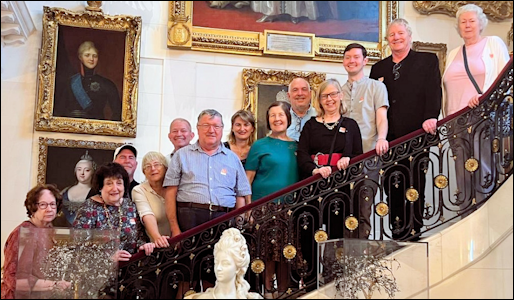
Joined Nine American Fabergé Connoisseurs to View Nine Fabergé Eggs and More Museum Treasures at
the Virginia Museum of Fine Arts in Richmond (VA), Walters Art Museum in Baltimore (MD), and the
Hillwood, Estate, Museum & Gardens in Washington (DC). (The photograph on the Marjorie Merriweather
Post staircase at her Hillwood Mansion in Washinton (DC) shared with permission and courtesy of Mark
Andersen, a long-time reader of the Fabergé Research Newsletter.)
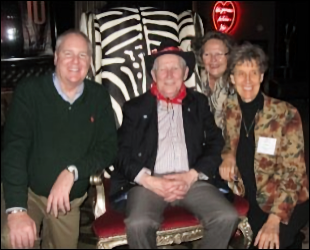
Kudos to Timothy Adams, who organized the 2025 London events below for 26 Fabergé enthusiasts from the United States, the United Kingdom, Slovenia, and Finland, and a Big Thank You to our Hosts.



de Guitaut, Caroline. Fabergé in the Royal Collection, 2003, p. 153.
(Photograph Shared by Greg Hazlett, USA)
(Right) Fabergé Enthusiasts from Several Countries Visited, The Edwardians: Age of Elegance (September 1 – November 23, 2025) in the Kings Gallery with “renowned contemporary artists of the
period, including Carl Fabergé, adorable Fabergé animals cut from an array of precious stones, like lapis lazuli, sapphire, and ruby … and covers the period from Edward and Alexandra’s
wedding in 1863 up to the end of the First World War”, and with a potpourri of Fabergé frames.
(Photographs Shared by Timothy Adams, USA, and Riana Benko, Slovenia)
Explore more on the Internet: Fabergé: The Artist-Jeweller | From Russia with Love: Family Gifts | Easter Eggs beyond Compare | A Royal Menagerie in the Making.
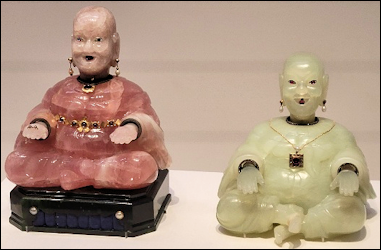
1928, and Fabergé, St. Petersburg, Russia, 1906.
(Photographs Shared by Timothy Adams, USA, and Riana Benko, Slovenia)
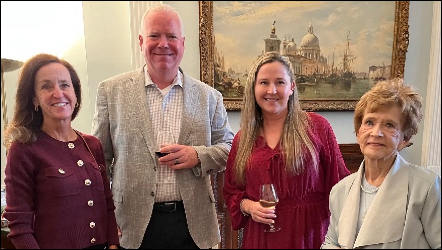
the Houston Museum of Natural Science (HMNS) recalled fondly their two Fabergé
symposiums with very informative research presentations held in Texas during
2013 and 2016. Each event had over 100 attendees from all over the world.
(Photograph Shared by Riana Benko, Slovenia)

Anniversary of the London Wartski Jewelry Firm Specializing in Fabergé over the Years.
(Courtesy Wartski)
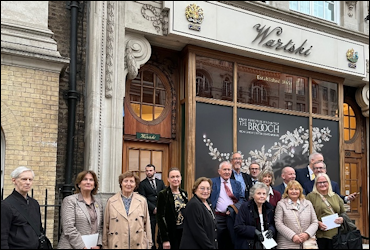
have been considerably altered in their form, material and design over the
3,000 years they span, yet serve the same purpose when
they were first conceived.”
(Summary from the Wartski catalog with the photograph
shared by the International Visitors)
The exhibition catalog, From Function to Fantasy: The Brooch, 1200 BCE to the Contemporary, written by Katherine Purcell, Wartski co-director and exhibition curator, traces the evolution of the jeweler’s art across more than three millennia. Beginning with a Bronze Age fibula, the narrative progresses through Gothic and Renaissance enameling to the opulent, gem-studded creations of the 18th and 19th centuries. It features iconic Belle Époque houses, such as Cartier and Fabergé, alongside Art Nouveau masters, René Lalique and Georges Fouquet. Later works from the Art Deco period, as well as those by Salvador Dalí, reveal the progression toward abstraction and fantasy. This publication is an essential addition to the library of any jewelry scholar or enthusiast.
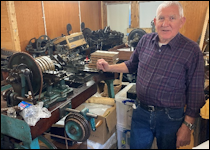
Machine in His Engine Turning Studio
(Photograph Courtesy of Greg Daubney, UK)
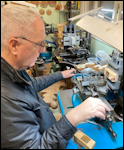
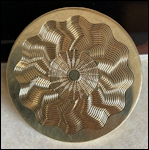
Engine Turning Machine and a Rose Engine
Pattern by Greg Daubney
(Photographs Courtesy of Greg Daubney, UK)

successful learning events in the Wood-Heath Studio
full of rescued and restored engine turning machines.
Our special thanks to Cynthia Coleman Sparke and our
hosts, the Wood-Heath family.
(Photograph by Timothy Adams with permissions
granted by the delighted participants.)
studio about an hour away from London. The details of the Engine Turning/Guilloché process which incises metal with a pattern used in Fabergé’s time and still
today is explained in his talk at the 2016 Ornamental Turners International Symposium in Denver, Colorado.
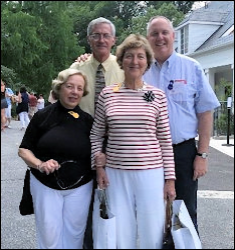
Display – Top Row, Left to Right: Annemiek Wintraecken
(Deceased in 2021), John Jenkins (96th birthday in 2025),
George Terrell (Deceased 2024)
(Fabergé Research Newsletter, Summer 2014)
(DC) – Top Left: George W. Terrell, Jr., with
Fabergé Enthusiasts (Deceased in 2024)
(Fabergé Research Newsletter,
Fall and Winter 2018)
Gathering. In 2025, John Jenkins, our UK Fabergé news lookout
for many years beginning in 1998 recentely celebrated
his 96th birthday.
(Photograph McCanless Collection)
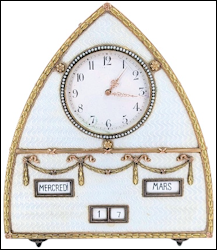
30 Close-up Photographs, Estimate:
$40,000 – $60,000, Sale Price Only
with Log-in
(Sarasota Estate Auction,
June 8, 2025, Lot 1001)
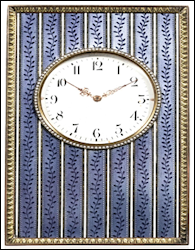
Number 15182, Estimate: CHF
30,000 – 50,000, Sold for CHF 100,000
(Piguet Geneva, June 19, 2025, Lot 6)
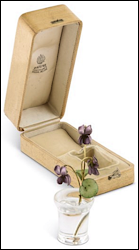
Wooden Case by Mikhail
Perkhin, Estimate: EUR
200,000 – EUR 300,000, Sold
for EUR 226,800
(Shared by Katrina Warne
Christie’s Paris,
June 27, 2025, Lot 6)
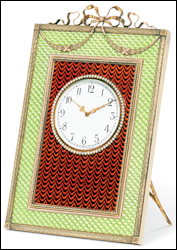
Stock Number 23245, Estimate:
GBP 60,000 – GBP 80,000, Sold
for GBP 119,700
(Christie’s London,
July 1, 2025, Lot 17)
Archival Russian research tool to be auctioned at the Literary Fund Auction House (Litfond) in St. Petersburg on October 23, 2025 (Photo Album Belonging to Russia’s Last Empress to Be Auctioned in St. Petersburg) [Empress Alexandra Feodorovna] (Courtesy Paul Gilbert’s website, October 15, 2025, and sale results, October 29, 2025).
New! Christie’s: Take your passion for art to the next level with Christie’s Education. Start learning today with our online, livestream and in-person courses.
December 2, 2025, Christie’s, London: The “Winter Egg and Important Works by Fabergé from a Princely Collection” auction also includes a major Fabergé hardstone figure and an original Henrik Wigström Design Album of “just under 50 exceptional works by Fabergé, including hardstone figures, animals, objects de vertu and furniture”.

(Photograph, Courtesy Christie’s, London)
Website links:
- Gifted by Emperor Nicholas II to the Dowager Empress Maria Feodorovna on Easter Day, 1913: the Winter Egg Video (Courtesy Christie’s, London)
- Research Tool: “Collecting Guide: 15 Things You Need to Know about Fabergé” (June 5, 2023)
December 17, 2025, Heritage Auctions, Dallas, Texas: “Imperial Fabergé & Russian Works of Art” (Sale 8232) with ca. 75 works by Fabergé and his competitors, Russian Imperial silver, icons, and jewelry with well-researched provenances, has a hard copy catalog.
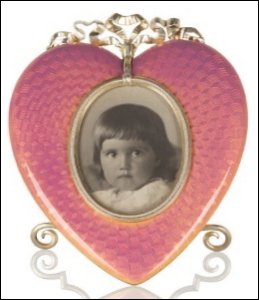
PROVENANCE: Purchased by Emperor Nicholas II (1868-1918) from Fabergé’s St. Petersburg branch on July 16, 1907 for 140 rubles; Grand Duke George Mikhailovich (1863-1919) and Grand Duchess Marie Georgievna (1876-1940); Princess Nina Georgievna Chavchavadze (1901-1974) inherited from the above; Prince David Pavlovich Chavchavadze (1924-2014) inherited from the above; Sold Christie’s New York, Russian Works of Art, Important Silver and Objects of Vertu, 20 May 2015, Lot 32 acquired by a Private California, Collection; and then Private Collection, Los Angeles. Estimate: $60,000 – $80,000. (Heritage Auctions)
New! THE SPECIALIST – A New Podcast by Sotheby’s. Your weekly dose of wonder. Our global specialists are connoisseurs and market experts in 40 countries and 70 collecting categories. They will be your guides, exploring the significance and journey of an extraordinary work with those who know it best.
A 12-minute podcast, Fabergé’s Rediscovered Imperial Flower with Helen Culver Smith, was published on August 19, 2025, and one of the flowers (G.) on view later in the year.

H.W.
 – active 1903-1917) Both pear blossoms are illustrated in the Sotheby’s
auction catalog entry.
(Left: Sotheby’s Auction, November 30, 2021, Lot 405. Right: Fabergé Study of a Pear
Blossom, Courtesy of The Worcestershire Yeomanry)
“The Fabergé ‘The Pear Blossom’ (right) will be exhibited at The Commandery in Worcester (UK). The delicate jewel was gifted in 1904 to the Queen’s Own Worcestershire Hussars by Rachel, Countess of Dudley, to celebrate the award of the Battle Honor ‘South Africa’ upon its return from the Boer War. On display as part of the city’s Armistice commemorations, all money from tickets sales will be donated by Worcester City Council to the fundraising campaign for The Worcestershire Soldier at The Commandery project.”
Website Links:
- $1.27 Million Fabergé Flower Stuns Jewelry Expert on ‘Antiques Roadshow’ (June 23, 2017)
- Magical Fabergé Flower Valued at £1 Million (April 15, 2018)
- Worcester: Rare Fabergé Jewel ‘The Pear Blossom’ on Display (no publication date cited)
December 18, 2025, A live Sotheby’s New York auction entitled Swinging on a Star: The Collection of Bing & Kathryn Crosby includes Fabergé pieces. Website Link: Bing Crosby’s Grand Piano from ‘High Society’ and Other Items from the Crooner’s Home to Sell at Auction (October 14, 2025)
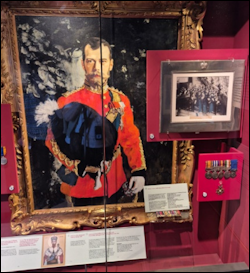
Edinburgh, Scotland, Edinburgh Castle
Houston, Texas. Houston Museum of Natural Museum of Science
Museum of Natural Science Fabergé Exhibition
(Courtesy Houston Museum of
Natural Science, Texas)
Jordanville, New York. Russian History Museum

Richmond, Virginia. Virginia Museum of Fine Arts
A new website welcomes visitors to the museum with “a remarkable permanent collection of more than 50,000 works of art from almost every major world culture.” At the Freeman Library, the custodians of the Fabergé and museum archives unveiled a new electronic version of their book and archives catalogs for 349 Fabergé objects. Additional good news: The Fabergé Collection gallery at the museum will not be closed during the museum’s expansion and renovation project of $261 million funded through a combination of public and private funds.
St. Petersburg, Russia, Fabergé Museum
An assortment of close-up images for each of the Fabergé eggs are featured in the Collection Highlights are an excellent resource for close-up research studies! An Exhibit Index published in 2014 is on line.
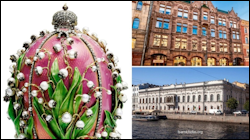
St. Petersburg Russia, Pavlovsk State Museum
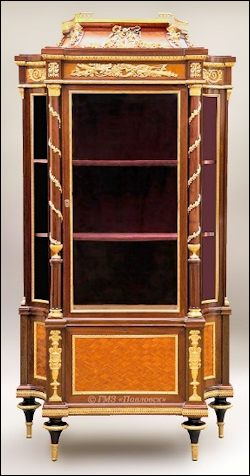
An index to Fabergé-related articles on the Pavlovsk State Museum website in Russian for the years 2020-2023 is of interest, especially the article entitled, “Historical Showcases for Fabergé Masterpieces“, summarized below in an English translation:
St. Petersburg, Russia, State Hermitage Museum
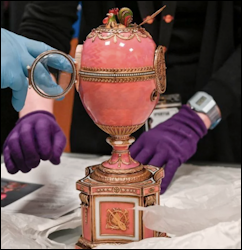
be re-exhibited in St. Petersburg after
restoration. The project was implemented
within the framework of the “Connection of
Times – Connection of Technologies” program
in partnership with Samsung. After restoration,
the bird sings again, opens its beak, moves
its tail, and produces musical sounds through
the tubes. The exhibit will be
placed in the Hall of ‘Charles Fabergé’
in the Hermitage General Staff Building.
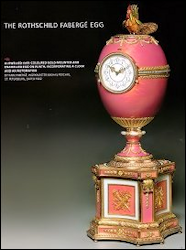
EggClock – Sold for £9 Million
($18.5 Million), Fabergé Egg
Sale Record
(Christie’s London, November
28, 2007; Fabergé Research
Newsletter, Winter 2014)
Washington (DC), Hillwood Estate, Museum and Gardens
“Mansion Library Updates by Jason Speck”, Head of Archives and Special Collection, in his June 2025 review details about the inventory of 1,200 volumes of books belonging to Marjorie Merriweather Post personal library. Part II is to follow shortly. Explore Hillwood from Home features a variety of topics easily accessed!
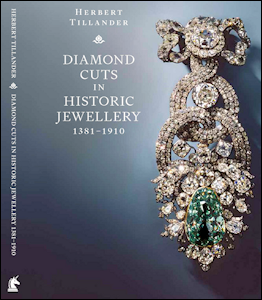
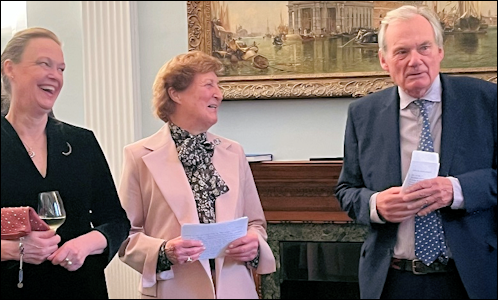
In a conversation with a fellow Fabergé enthusiast, Ulla Tillander-Godenhielm, a Finnish jeweler by trade, a regular newsletter contributor, and the author of five books about Fabergé, she responded to my question about the scarcity of Fabergé books in recent years with this observation: “… Yes, not much Fabergé, but we have to realize Fabergé’s era was only from the 1840’s to 1918, ca. 80 years out of the thousands of years there have been goldsmiths.” Her most recent monograph re-edited together with jewelry historian and expert draftsman Mia Hillo was unveiled in London. The monograph originally written and published in 1995 by Dr. Tillander-Godenhielm’s father, Herbert Tillander (1909-2006), covers historical diamond cuts from 1381-1910:
Paul Gilbert on his website, October 20, 2025, addresses this question – Why Are So Few Russian Language Books on the Romanovs Not Available in English?
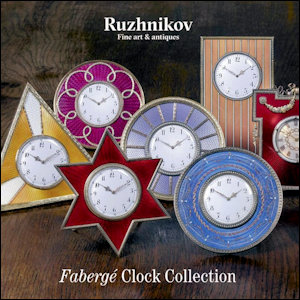
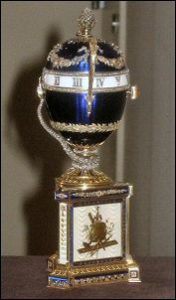
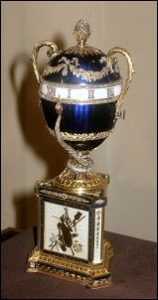
Shown in the Victoria and Albert Museum venue (June 23-September 25, 1977, Fabergé Loan Exhibition on the Occasion of the Queen’s Silver Jubilee, Catalog Entry, p. 83 with the object’s detailed description, p. 96)
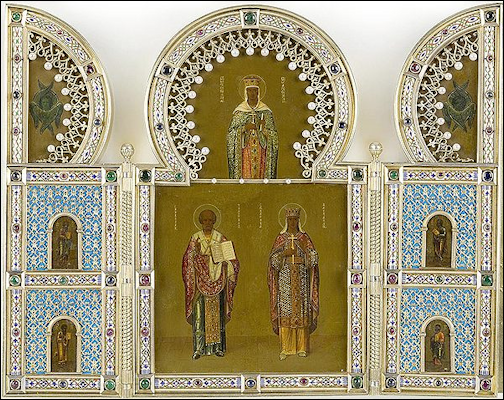
Modern publication: DeMarco, Anthony, “Louvre Acquires Rare Fabergé Triptych from Imperial Russia”, Forbes, June 2, 2025; Fabergé Research Newsletter, Spring 2025.
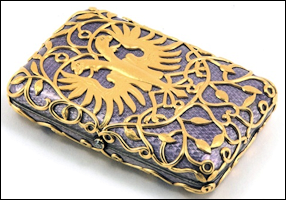
Why Cigarette Cases Are Smoking Hot, Financial Times, June 14, 2025, with a Compliment by Bonhams’ UK Co-head of Jewellery and Antiques Roadshow Expert, Kate Flitcroft, “If you’re building a collection, and money is no object, I would personally want to have examples by particular Fabergé workmasters,” she says, citing August Wilhelm Holmström and Feodor Rückert as names to seek out.”
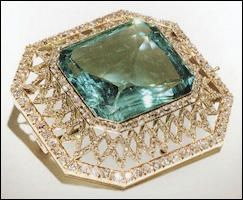
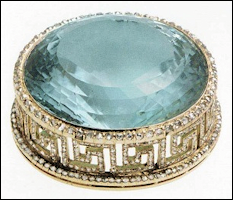

Details on the Third Brooch [far right] from Paul Gilbert’s website (October 27, 2025) states “On 18th October 2024, a diamond aquamarine brooch created by Carl Fabergé [far left], and recently recreated by the Russian Jewelery firm CHAMOVSKIKH, was presented at the Investing in Jewelry Art and Collectibles exhibit at the Moscow Financial Forum. The brooch is dedicated to the 130th anniversary of the wedding of Nicholas II and Alexandra Feodorovna in 1894.”